
How to clean a commercial refrigerator (and keep it running longer)
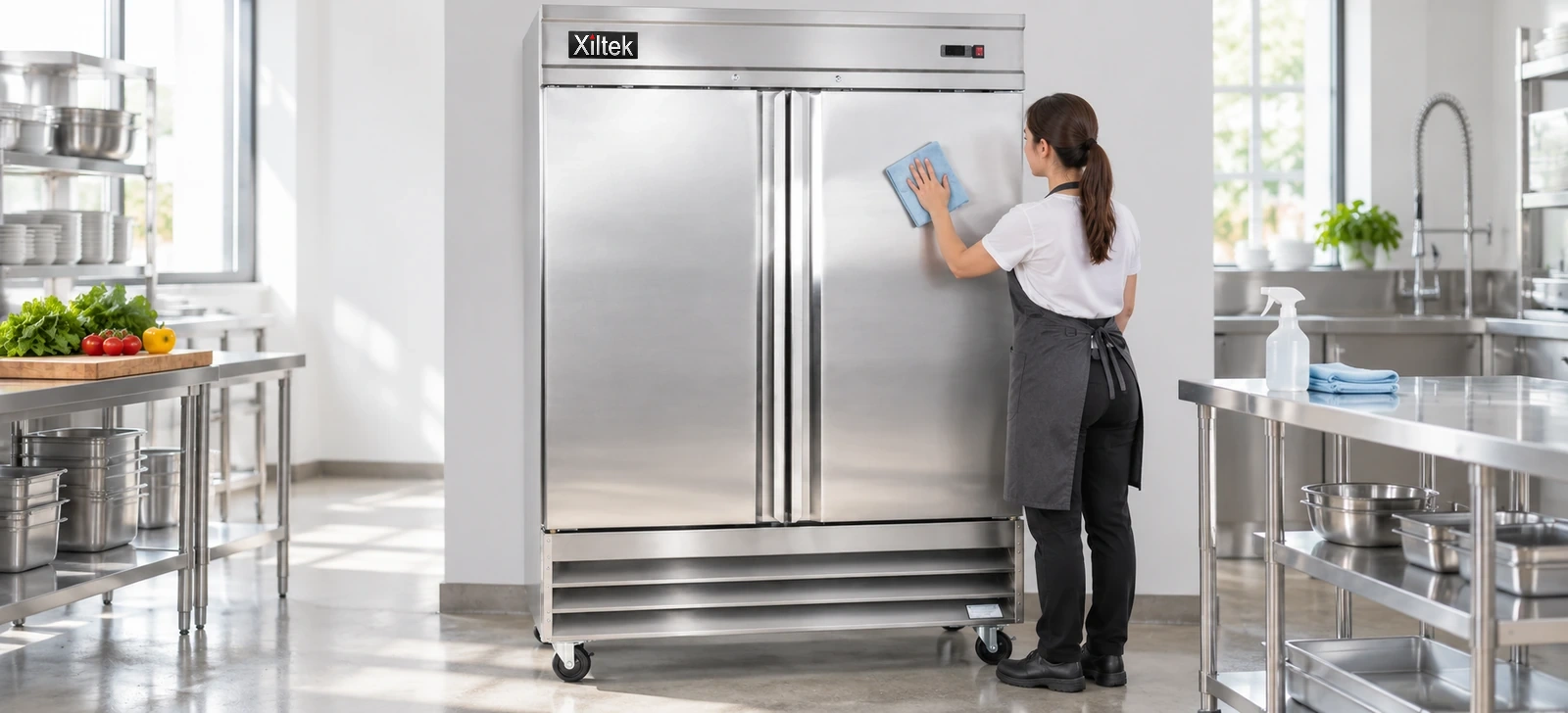
- Dirty condenser coils and worn gaskets cause most avoidable refrigeration problems.
- Clean the condenser coil monthly in a busy kitchen, and at least every three months elsewhere.
- Use mild soap and water on stainless steel, wipe with the grain, and avoid steel wool and chlorine bleach.
- A simple daily, weekly, monthly and quarterly routine takes only minutes and protects your food and your energy bill.
Most service calls on commercial refrigeration come down to dirt and neglect. A condenser clogged with dust and grease makes the compressor work harder, a torn gasket lets cold air leak out, and a blocked drain leaves water where it should not be. The good news is that the fixes are simple, and most of them take only a few minutes.
What you need
- Mild dish soap and warm water
- Soft cloths or sponges (no steel wool or scouring pads)
- A soft brush and a vacuum with a brush attachment
- A food-safe sanitizer, used as directed on its label
- A flashlight, so you can see behind the grille
Step-by-step: deep clean the interior
- Move food to another cold unit or a cooler with ice, keeping the time out of temperature as short as you can.
- Unplug the unit, or switch it off at the controller if the manual says that is acceptable.
- Remove shelves, pan racks and door liners and wash them in the sink with soap and warm water.
- Wipe the interior walls, floor and ceiling with a soapy cloth, working from top to bottom.
- Rinse with a clean damp cloth so no soap film remains, then dry with a clean towel.
- Sanitize food-contact surfaces with a food-safe sanitizer, following its label for concentration and contact time.
- Reload shelving, restart the unit and let it reach temperature before restocking.
Cleaning stainless steel the right way
Stainless steel is durable, but the wrong cleaner can dull it or cause pitting. Wipe with the grain, use soft cloths and finish by drying so water spots do not form.
- Do use mild soap and warm water, or a cleaner made for stainless.
- Do rinse and dry afterward.
- Do not use steel wool, wire brushes or abrasive powders.
- Do not leave chlorine bleach or salty solutions sitting on the surface, since chlorides can damage the finish.
The condenser coil: the most important job
The condenser is where the system gives off heat. When it is coated in dust and grease, the compressor runs longer and hotter, energy use climbs and the unit wears out sooner. Cleaning it is the single most valuable maintenance task.
- Unplug the unit.
- Remove the front grille or access panel.
- Use a soft brush to loosen dust, working along the fins rather than across them.
- Vacuum up the debris. Straighten any bent fins gently with a fin comb if needed.
- Check that the condenser fan spins freely and wipe the blades.
- Replace the panel, plug the unit in and confirm the fan runs.
Gaskets and doors
The door gasket keeps cold air in and warm air out. Wipe it with soapy water and check the folds, where food and grime collect. Look for tears, flat spots or gaps. A simple test: close the door on a dollar bill. If it pulls out with no resistance, the seal is weak at that spot. Replace worn gaskets promptly, since a leaking seal forces the unit to run constantly. Also check that doors close fully and that hinges are tight.
Drain and drip area
Check that the drain is clear and that no water pools in or under the unit. Wipe the condensate area to prevent odors and mold.
A simple cleaning schedule
| How often | What to do |
|---|---|
| Daily | Wipe spills, handles and the exterior; check the thermometer |
| Weekly | Clean gaskets and shelves; wipe interior surfaces |
| Monthly | Clean the condenser coil and check the fan |
| Quarterly | Deep clean the interior; inspect drain, hinges and door alignment |
| Yearly | Have a qualified technician inspect the system |
Common mistakes to avoid
- Blocking the air vents or fan inside the unit with boxes
- Pushing the unit tight against a wall, so the condenser cannot breathe
- Using a pressure washer on controls or electrical parts
- Skipping the coil because the unit "seems fine"
When cleaning is not enough
If the unit still will not hold temperature, check our guide to the signs your refrigerator needs attention. Need a gasket, hinge or fan? Search our parts catalog by model number.
Xiltek makes upkeep easy to plan for
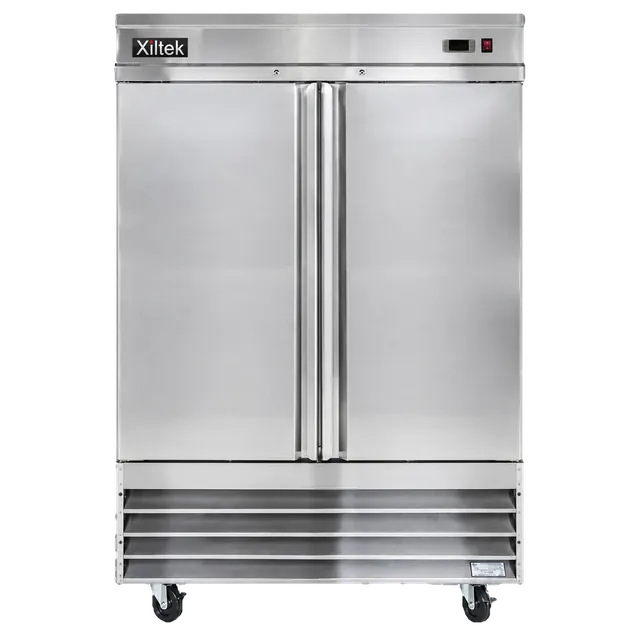
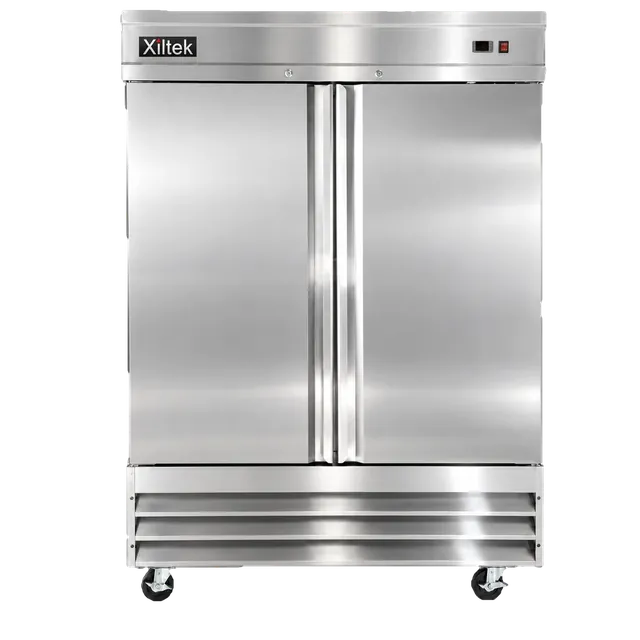
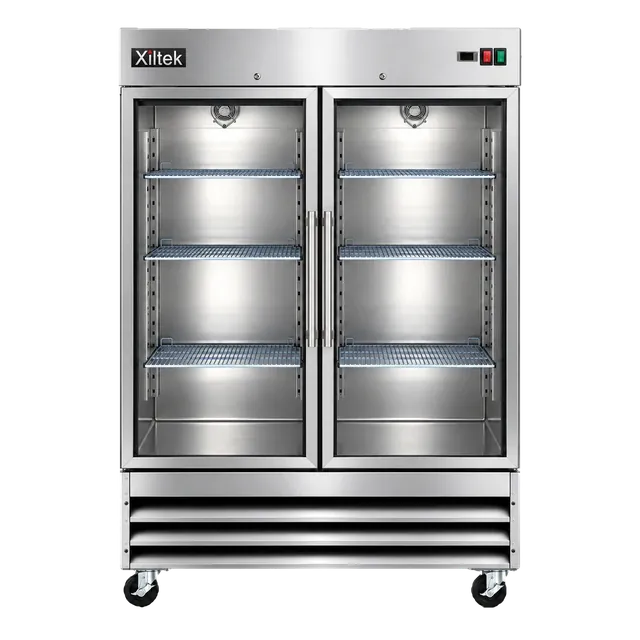
Regular cleaning keeps any unit running well, and Xiltek stainless steel cabinets are straightforward to wipe down. If a gasket, shelf or other part needs replacing, search the Xiltek parts catalog by model number to find the right one.
Smooth stainless steel surfaces keep wipe-downs quick, so the unit looks as good in year five as it did on delivery day.
Frequently asked questions
How often should I clean the condenser coil?
Monthly in a busy or greasy kitchen, and at least every three months in cleaner spaces.
Can I use bleach on stainless steel?
Avoid leaving chlorine bleach on stainless steel, since it can damage the finish. Use mild soap and water, and a food-safe sanitizer according to its label, then rinse and dry.
How do I know my gasket needs replacing?
Look for tears, hardening or gaps, and try the dollar-bill test. If the bill slides out easily when the door is closed on it, replace the gasket.
Do I need to unplug the unit to clean it?
Unplug it for coil and fan cleaning. For wiping the interior, follow the manual, and remove food first so it is not left out of temperature.