
How to choose the right reach-in refrigerator or freezer for your business
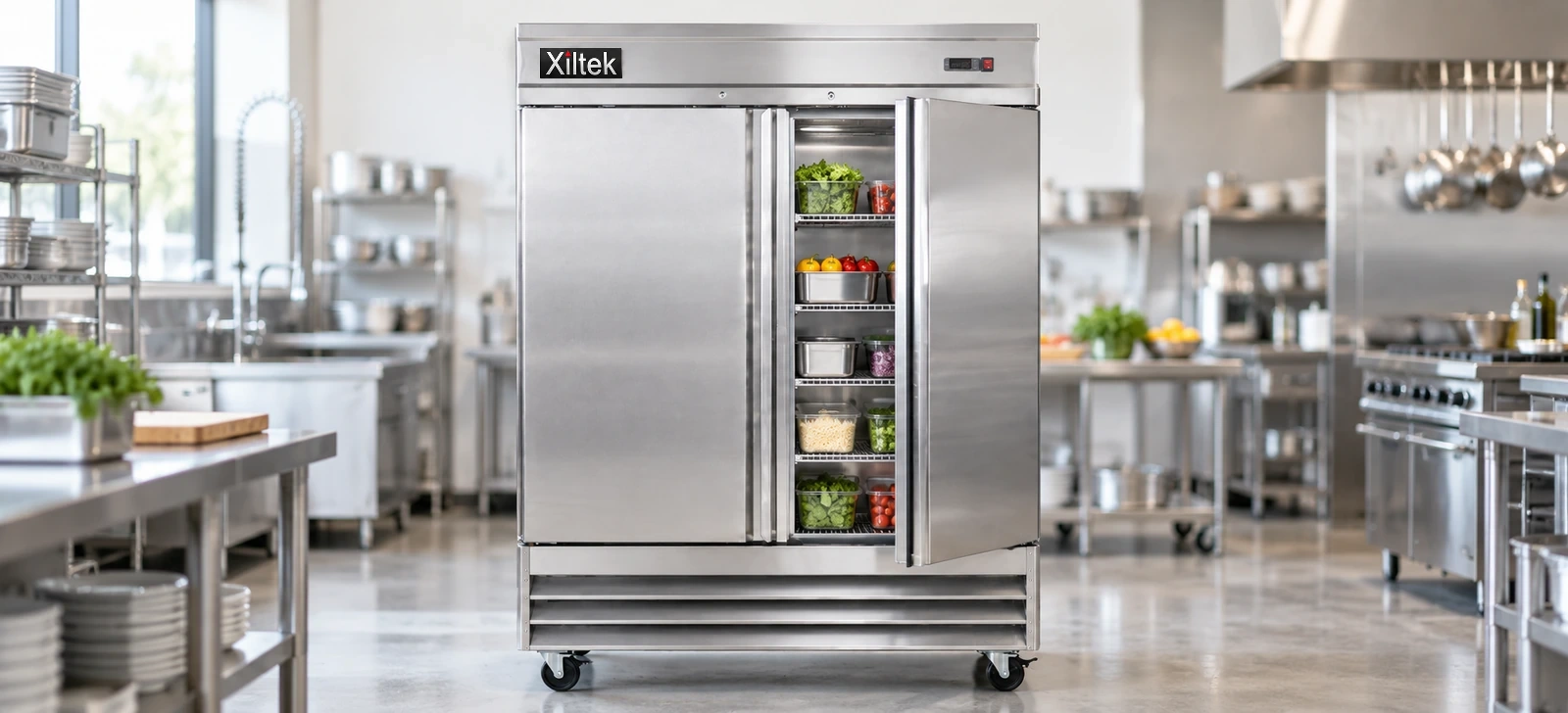
- Size for your busiest day, not your average one, and consider going one size up.
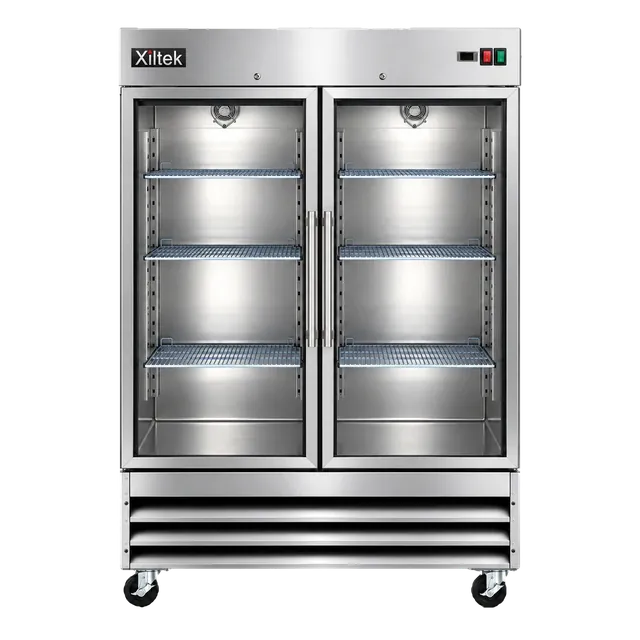
- Solid doors are best for back-of-house storage; glass doors are best where seeing the product matters.
- Measure the space, the doorway and the clearance the unit needs to breathe.
- Compare total cost of ownership: energy use, parts availability and support matter as much as price.
A reach-in is the workhorse of most commercial kitchens and shops. It looks simple, but a few decisions at the start decide whether it quietly does its job for years or becomes a daily frustration. Here is how to choose.
1. Decide what the unit is for
Is this bulk storage in the back, a line unit you open constantly, or a display for customers? Bulk storage favors solid doors and maximum capacity. A busy line favors easy access and durability. Customer-facing use favors glass doors.
2. Size it for your busiest day
Think about your largest delivery and your busiest weekend, not an average Tuesday. A unit that is jammed full cannot circulate air properly, which makes it work harder and hold temperature less evenly. If you are between two sizes, the larger one usually costs less than running out of space.
| Model | Size | Dimensions (L × D × H) | Capacity |
|---|---|---|---|
| XR-1-HC | 29" One Door Reach‑In | 29" x 32.25" x 82.25" | 23 cu. ft. |
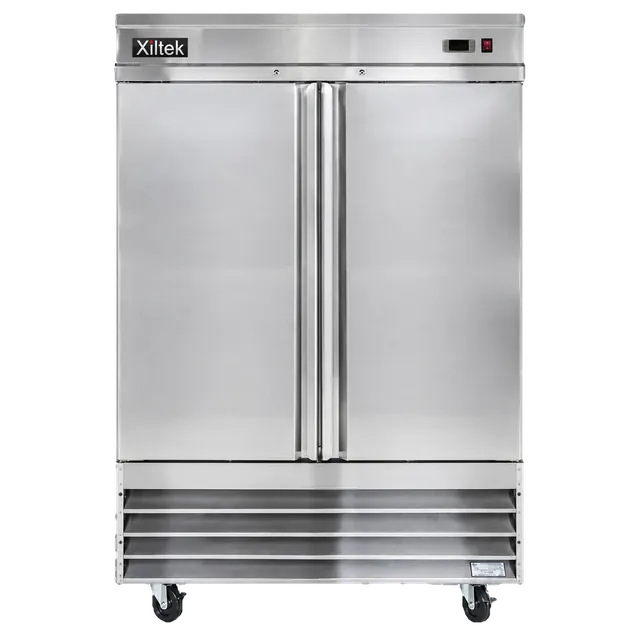
| XR-2-HC | 54" Two Door Reach‑In | 54" x 32.25" x 82.25" | 47 cu. ft. |
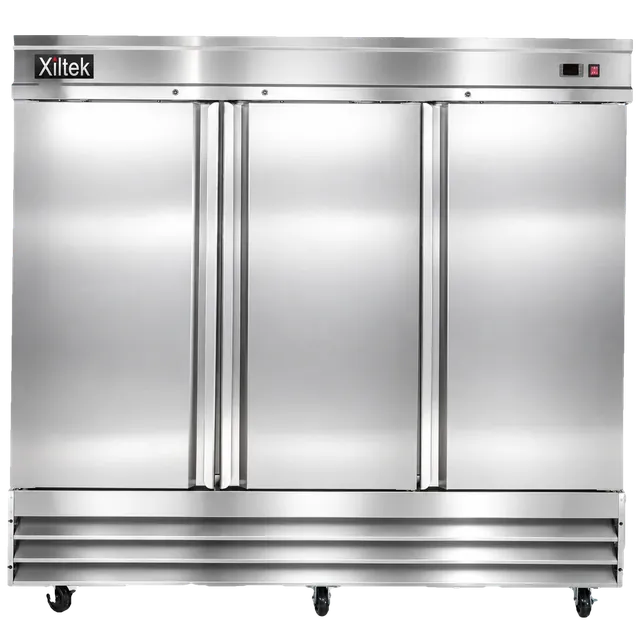
| XR-3-HC | 81" Three Door Reach‑In | 80.9" x 32.25" x 82.25" | 72 cu. ft. |
| XF-1-HC | 29" One Door Reach‑In | 29" x 32.25" x 82.25" | 23 cu. ft. |
| XF-2-HC | 54" Two Door Reach‑In | 54" x 32.25" x 82.25" | 47 cu. ft. |
| XF-3-HC | 81" Three Door Reach‑In | 80.9" x 32.25" x 82.25" | 72 cu. ft. |
3. Solid doors or glass doors?
| Solid door | Glass door | |
|---|---|---|
| Best for | Back-of-house storage, bulk ingredients | Drinks, grab-and-go, quick visual stock checks |
| Temperature holding | Excellent, with the best insulation | Very good; interior lights add a little heat |
| Visibility | Open the door to see inside | See the contents without opening |
| Energy use | Typically lower | Typically slightly higher |
4. Refrigerator or freezer?
Refrigerated food should be held at 41°F or below and frozen food at 0°F. If you need both, separate units are generally easier to service and let you set each temperature precisely. See our guide to safe food storage temperatures.
5. Measure carefully
- The final spot, plus clearance around the sides, back and top (check the manual)
- Every doorway, hallway and corner the unit must pass through
- Door swing, so it does not block a walkway or another door
- Floor level and strength, since a loaded unit is heavy
6. Check the electrical
Most commercial reach-ins in this class run on standard 115-volt power, but check the voltage and amperage on the spec sheet and make sure the outlet and circuit can handle it, ideally not shared with other heavy equipment.
7. Features that matter
- Stainless steel interior and exterior for durability and easy cleaning
- Self-closing doors, so a door left ajar does not spoil product
- Casters or adjustable legs for placement and cleaning
- A clear digital temperature display and controller
- Easy front access to the condenser for cleaning
- A modern, efficient refrigeration system such as R290
8. Think about total cost, not just price
The cheapest unit is not always the least expensive. Energy use, how easy the unit is to clean, how long it lasts and whether replacement parts are available all affect what it really costs. Free shipping and reachable support help too.
Ready to compare? Browse the full catalog or contact us with your space and menu, and we will help you narrow it down.
Why Xiltek reach-ins are a good fit
Xiltek offers reach-in refrigerators and freezers in one-, two- and three-door sizes, with solid and glass doors. Every model page lists its dimensions, capacity, shelf count and electrical details, and has a downloadable spec sheet, so you can check that a unit fits your space before you order.
Stainless steel construction and an efficient R290 refrigeration system make these units well suited to the daily demands of a commercial kitchen.
Frequently asked questions
How many doors do I need?
Match the door count to your capacity needs and the room you have. One-door units suit small spaces and smaller kitchens, two-door units are the most common all-rounder, and three-door units suit high-volume storage.
Are glass-door units less efficient?
Typically slightly, since glass insulates less than a solid door and interior lights add heat. For product you need customers to see, the sales benefit often outweighs that.
How much clearance does a reach-in need?
Follow the clearances in the owner's manual. As a rule, leave room at the back and sides so the condenser can breathe, and never block the vents.
Should I buy a refrigerator and a freezer, or a dual-temperature unit?
Separate units are usually easier to service and give you full control of each temperature. Choose based on your menu and space.