
Safe food storage temperatures: a complete guide for restaurants
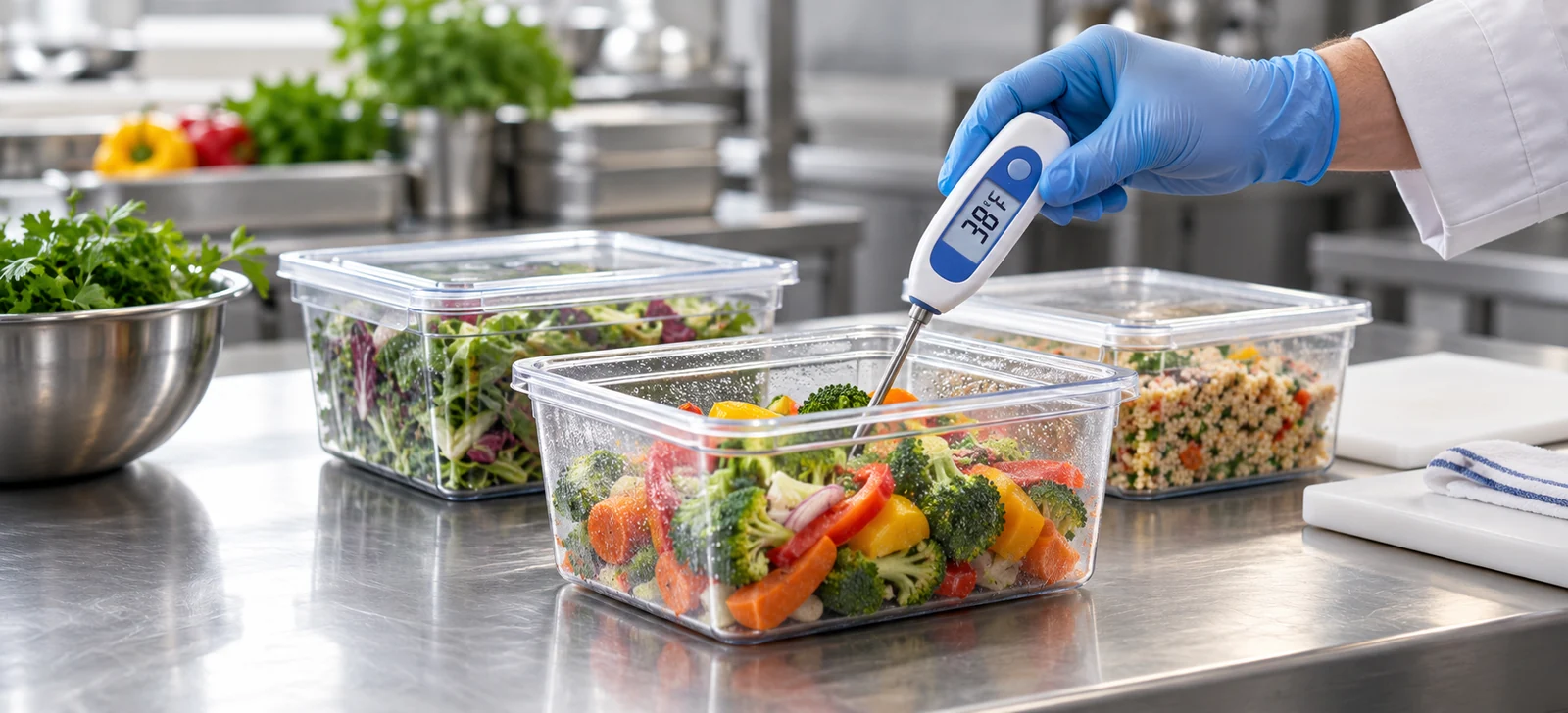
- Keep cold food at 41°F or below, frozen food at 0°F or below and hot food at 135°F or above.
- The "danger zone" is between 41°F and 135°F, where bacteria multiply fastest.
- Store ready-to-eat food above raw food, and raw food by the temperature it must be cooked to.
- Check and log temperatures every shift, and always follow your local health code.
Temperature control is the foundation of food safety. Most foodborne illness in kitchens traces back to food spending too long in the wrong temperature range. This guide summarizes the key numbers from the FDA Food Code, which most US health departments base their rules on. Your local code may differ, so always check with your health department.
The danger zone
Between 41°F and 135°F, bacteria can multiply quickly. The goal of every storage, cooking and holding step is to keep food out of that range, or to move through it as fast as possible.
The key temperatures
| Situation | Temperature |
|---|---|
| Cold holding (refrigerator) | 41°F (5°C) or below |
| Frozen storage | 0°F (-18°C) or below |
| Hot holding | 135°F (57°C) or above |
| Cook poultry and reheated food | 165°F (74°C) |
| Cook ground meat | 155°F (68°C) |
| Cook whole cuts of meat and fish | 145°F (63°C) |
Cooling food safely
Cooling cooked food is where many kitchens slip. The Food Code calls for cooling from 135°F to 70°F within two hours, then from 70°F to 41°F within the next four hours, six hours in total. Shallow pans, ice baths, ice wands and smaller portions all speed cooling. Do not put large, hot pots straight into the refrigerator.
Organize the refrigerator by risk
Store food top to bottom in order of the temperature it needs to be cooked to. That way juices from raw items cannot drip onto food that will not be cooked again.
- Top shelf: ready-to-eat food and produce that will not be cooked
- Next: seafood and whole cuts of meat (cooked to 145°F)
- Next: ground meat (cooked to 155°F)
- Bottom shelf: poultry (cooked to 165°F)
Use FIFO and date marking
First in, first out means new stock goes behind older stock and the oldest gets used first. Label prepared items with the date. Under the Food Code, ready-to-eat, time and temperature-controlled food held at 41°F for more than 24 hours should be date-marked and used within seven days, with the day of preparation counting as day one.
Let the air move
- Do not overpack the cabinet or block the fan and vents.
- Keep food off the floor of the unit and use the shelving provided.
- Do not leave doors open while you load or unload.
- Allow hot food to cool properly before loading a refrigerator heavily.
Thaw safely
Thaw frozen food in the refrigerator, under cold running water, in the microwave if it will be cooked immediately, or as part of the cooking process. Never thaw on the counter.
Monitor and record
Keep an accurate thermometer inside every unit and check it at the start and end of each shift. A written log makes problems obvious before they become losses. If a unit drifts above 41°F, find out why before it gets worse. See the signs your refrigerator needs attention.
Xiltek refrigeration built for food-safe temperatures
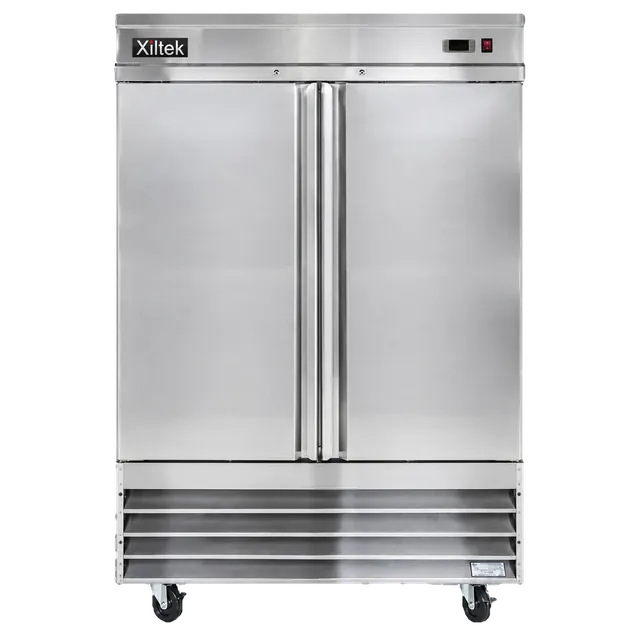
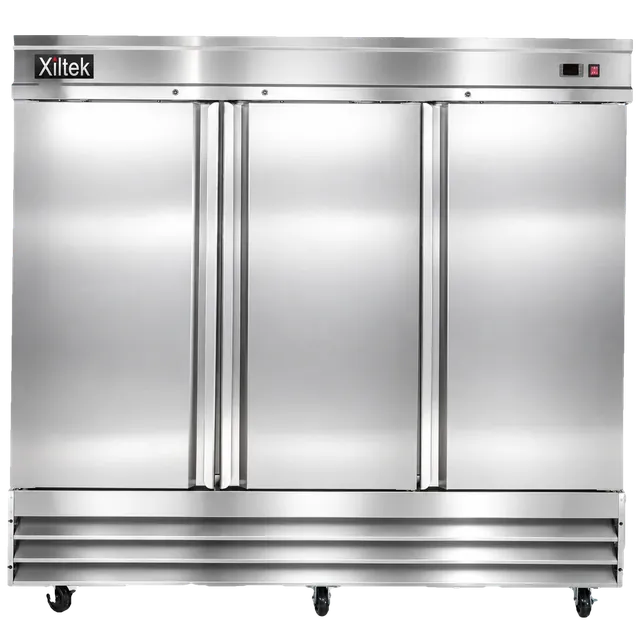
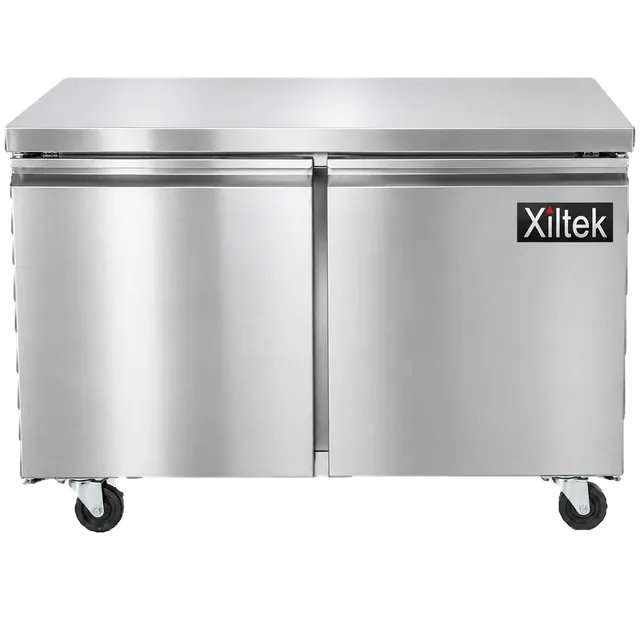
Xiltek reach-in refrigerators are designed to hold 33°F to 41°F (0.5°C to 5°C), the range commonly used for cold food storage, with an R290 natural refrigeration system. Explore the Xiltek refrigerators and freezers, and always confirm the rules that apply in your area with your local health department.
Stainless steel interiors and efficient R290 refrigeration help keep the cabinet cold and consistent through a busy service.
Frequently asked questions
What temperature should a commercial refrigerator be?
41°F (5°C) or below for food safety. Many operators set their units a few degrees lower, around 36°F to 38°F, to leave a safety margin.
What temperature should a freezer be?
0°F (-18°C) or below.
How long can food sit out?
Time and temperature-controlled food should not spend more than four hours in the danger zone in total, and less is better. Follow your local health code.
How often should I check unit temperatures?
At least at the start and end of every shift, and log them. Many kitchens also check mid-service during busy periods.