
How to clean refrigerator condenser coils: a step-by-step guide
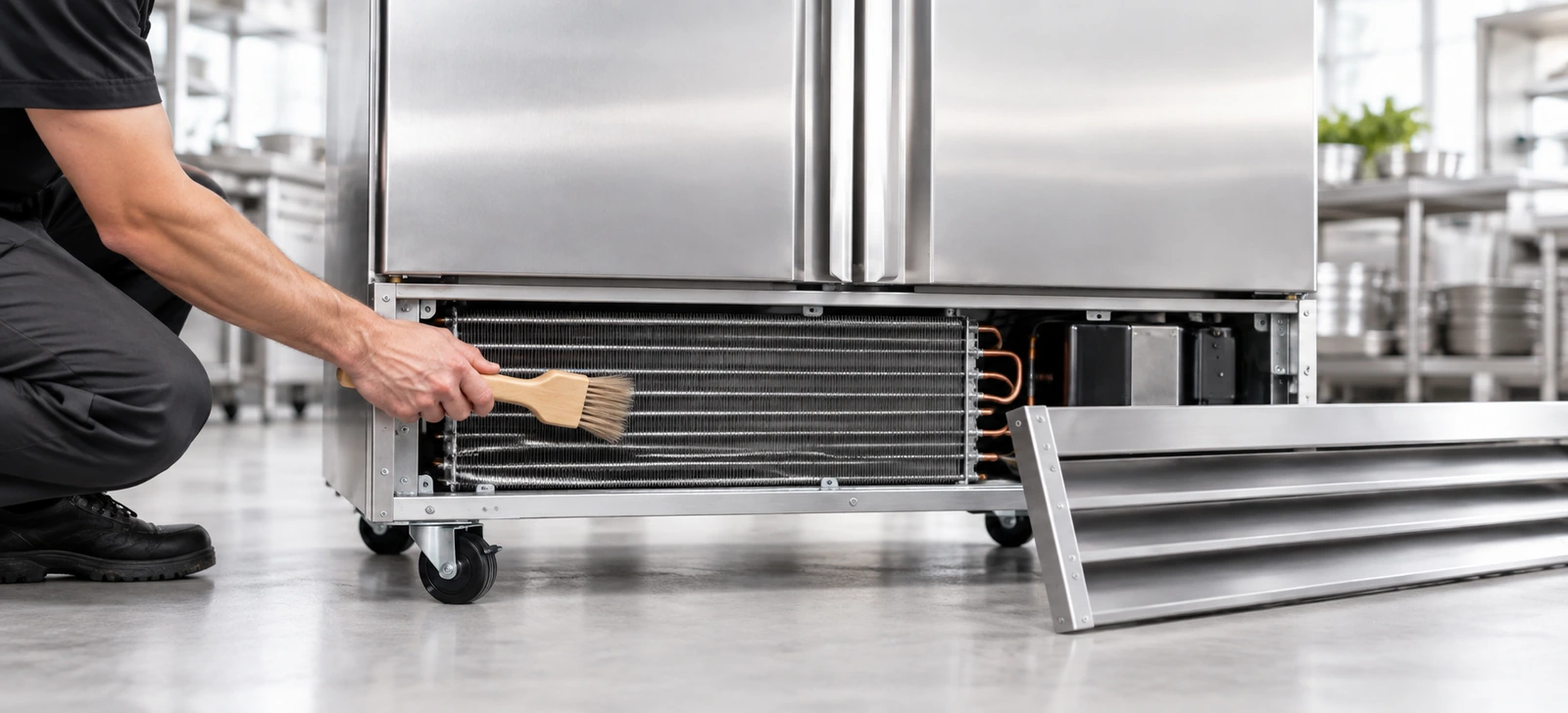
- The condenser coil releases heat. When it is clogged, the compressor works harder and wears out sooner.
- On most reach-ins and prep tables it sits behind a front grille near the bottom or inside the compressor compartment.
- Unplug the unit, brush the coil, vacuum the debris and check the fan.
- Clean monthly in a greasy kitchen and at least quarterly elsewhere.
If you only do one maintenance task on your refrigeration, make it this one. Clean condenser coils are the difference between a unit that runs cool and efficiently for years and one that struggles, overheats and fails early.
What is a condenser coil?
Refrigeration works by moving heat out of the cabinet. The condenser coil is where that heat is released into the room. Air is pulled across the coil by a fan, carrying the heat away. A finned metal coil like this works best when air can flow freely between the fins.
Where is it?
On most bottom-mounted reach-ins, prep tables and display cases, the condenser sits in the compressor compartment behind a front grille or removable panel near the floor. On top-mounted units it is in the housing above the cabinet. Check your owner's manual if you are not sure, and look for a finned radiator-like part with a fan beside it.
Why it needs cleaning
Kitchens put dust, lint and grease into the air, and the condenser fan pulls all of it through the coil. Over time the fins clog. Airflow drops, heat builds up and the system has to run longer to do the same job. The result is higher energy use, warmer cabinet temperatures and extra strain on the compressor, the most expensive part of the system.
How to clean it
- Unplug the unit so the fan cannot start.
- Remove the front grille or access panel.
- Look for dust, lint and grease. A flashlight helps.
- Loosen debris with a soft brush, working along the fins, not across them.
- Vacuum up the loosened dirt with a brush attachment.
- For greasy buildup, use a coil cleaner made for refrigeration coils, following its directions.
- Gently straighten any bent fins with a fin comb.
- Wipe the fan blades and check that the fan turns freely.
- Replace the panel, plug in the unit and confirm the fan runs.
How often?
| Environment | How often |
|---|---|
| Kitchen with fryers or heavy grease | Monthly |
| Typical restaurant kitchen | Every one to two months |
| Cleaner spaces, such as a cafe or retail shop | Every three months |
Signs the coil is dirty
- The compressor runs almost constantly
- The unit is warm to the touch around the compressor compartment
- Temperatures creep up in warm weather
- Energy bills rise for no clear reason
For the rest of your routine, see our guide to cleaning a commercial refrigerator. If a fan or other part needs replacing, search the parts catalog.
Keep your Xiltek running at its best
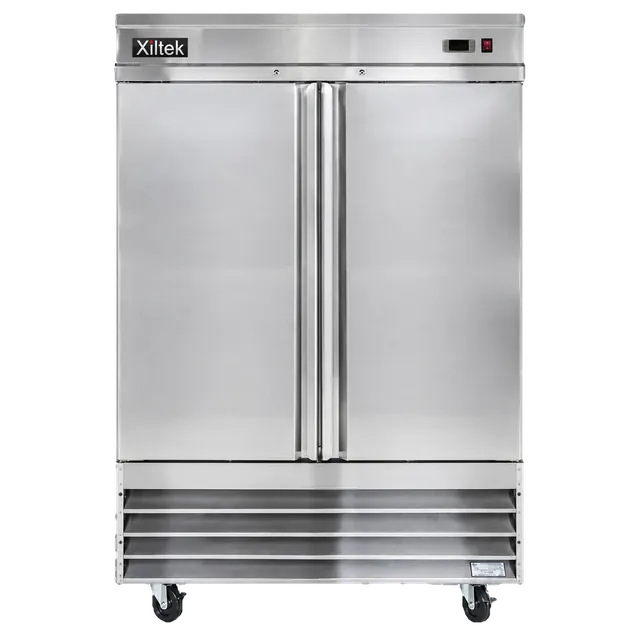
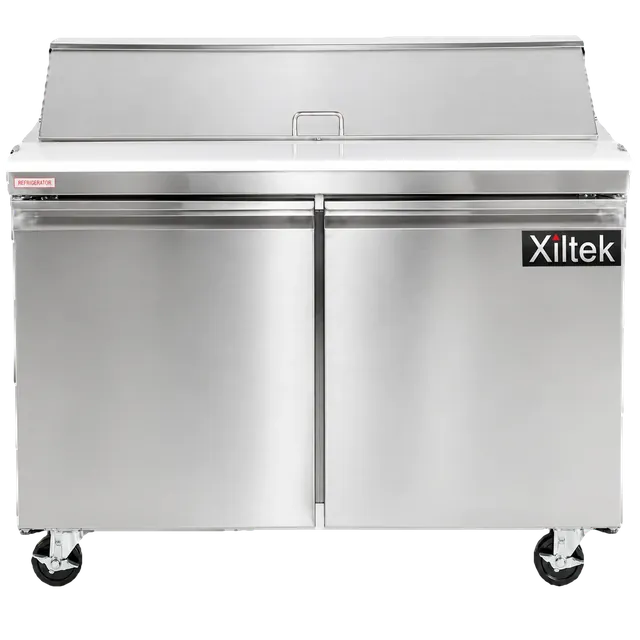
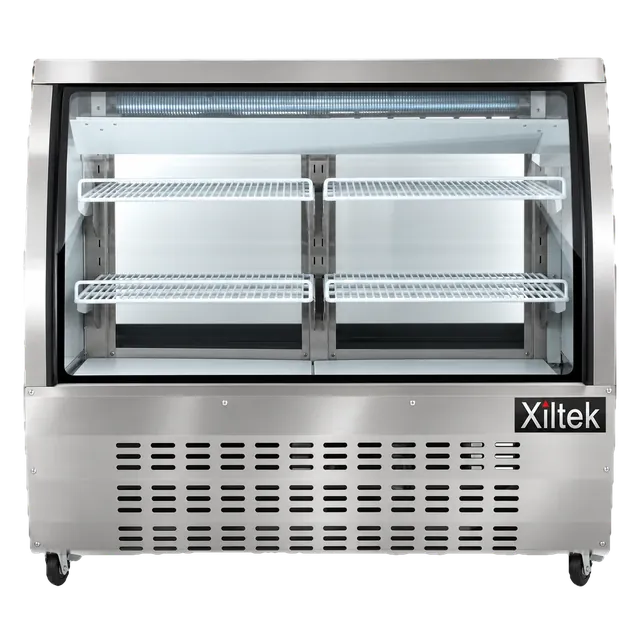
A clean condenser is one of the simplest ways to protect any refrigeration system, including your Xiltek unit. If you ever need a replacement component, look it up by model number in the Xiltek parts catalog.
Efficient R290 refrigeration and sturdy stainless steel construction mean a little regular care goes a long way.
Frequently asked questions
Can I use compressed air to clean the coil?
It can help dislodge dust, but it blows debris around the room. A brush and vacuum capture the dirt and are the better first choice in a kitchen.
Do I have to turn the unit off to clean the coil?
Yes. Always unplug the unit before you clean the coil or touch the fan.
How do I know where the condenser is on my model?
Check the owner's manual. Most bottom-mounted units have it behind the front grille near the floor.