
Why R290 is the smarter refrigerant for commercial equipment
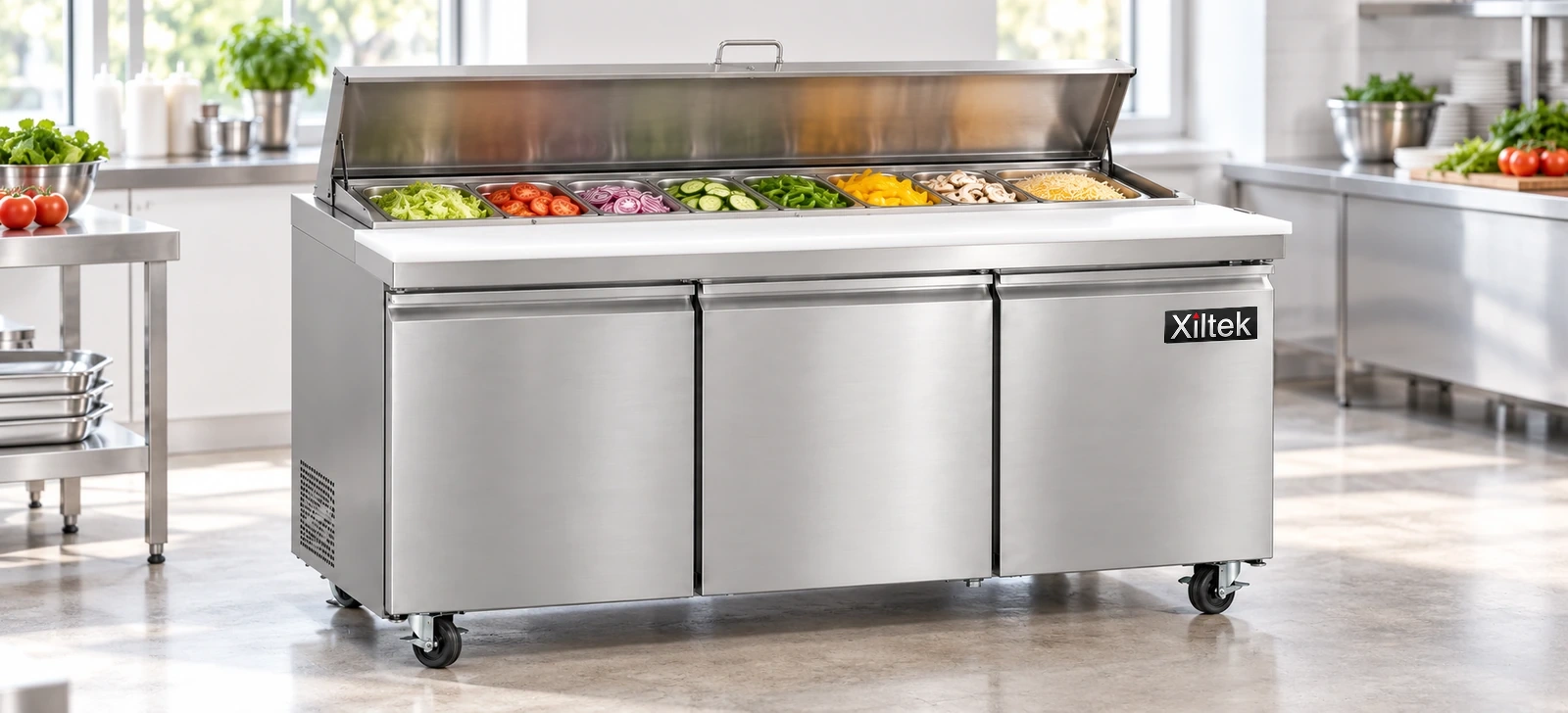
- R290 is propane used as a refrigerant. Its global warming potential (GWP) is about 3, compared with roughly 1,430 for R134a and 3,900 for R404A.
- It moves heat efficiently, which can mean lower energy use in a well-designed unit.
- It is flammable, so safety standards strictly limit the charge in each sealed, factory-built system.
- Federal rules under the AIM Act are phasing down high-GWP refrigerants, so R290 equipment is built for where the market is heading.
If you shop for commercial refrigeration today, you will see R290 on more and more spec sheets. It is propane, purified and used as a refrigerant, and it has become one of the leading choices for self-contained commercial refrigerators, freezers, prep tables and display cases. This guide explains what it is, why manufacturers are moving to it and what it means for a business owner.
What is R290?
R290 is the refrigerant-grade form of propane. It is a "natural" refrigerant, meaning it is a substance that occurs in nature rather than a synthetic compound. It has been used in household refrigerators in much of the world for decades, and in the United States it is now widely approved for self-contained commercial equipment.
The climate case: a GWP of about 3
Global warming potential (GWP) measures how much heat a gas traps compared with carbon dioxide over a set period. The lower the number, the smaller the climate impact if refrigerant ever escapes.
| Refrigerant | Type | Approx. GWP | Notes |
|---|---|---|---|
| R290 (propane) | Natural hydrocarbon | 3 | Very low impact, flammable (A3) |
| R134a | HFC | 1,430 | Common in older units, being phased down |
| R404A | HFC blend | 3,900 | Widely used for decades, heavy phase-down pressure |
GWP values vary slightly depending on which assessment report is used, but the gap between R290 and older HFC refrigerants is enormous under any of them.
It is efficient
R290 has excellent thermodynamic properties. It carries a lot of heat for each pound circulated and works at moderate pressures, so compressors can be smaller and run efficiently when the system is designed for it. In practice, that can show up as lower electricity use to hold the same temperature. Actual savings depend on the whole design: compressor, condenser, evaporator, insulation and controls.
How the flammability is managed
R290 is classified A3, meaning low toxicity but high flammability. That is the reason the rules around it are strict, and it is why it is used only in sealed, factory-built systems with a deliberately small charge. Safety standards (such as UL 60335-2-89) set limits on charge size and require design features that keep ignition sources away from any possible leak. In 2024 the EPA's SNAP Rule 26 aligned US requirements with the updated standard, allowing up to 300 grams in self-contained cases with doors (previously 150 grams).
- The refrigerant circuit is sealed at the factory, so nothing is assembled in your kitchen.
- Electrical components that could spark are designed and placed for hydrocarbon use.
- The charge is small. A unit holds a few ounces, not pounds.
The regulatory picture
The American Innovation and Manufacturing (AIM) Act directs the EPA to phase down production of high-GWP hydrofluorocarbons. Its Technology Transitions rule also sets GWP limits for new equipment in many commercial refrigeration categories, in the range of about 150 to 300 depending on the equipment type, with compliance dates running from 2025 through 2027. Requirements differ by product category and can change, so check the current rules for any specific equipment type. Equipment designed around R290 is already well below those limits.
What it means for your business
- Future-proofing: you are not buying equipment built around a refrigerant that is on its way out.
- Energy bills: a well-designed R290 system can reduce electricity use over the life of the unit.
- Service: R290 units are serviced like any other sealed system, but only by technicians trained in hydrocarbon refrigerants.
- Placement: follow the manual for clearances and ventilation, and keep the area around the unit clean and open.
What to look for when you buy
- A sealed, self-contained design built to current safety standards
- The refrigerant type and charge listed clearly on the spec sheet and data plate
- A quality compressor and a properly sized, easy-to-reach condenser
- Parts and support available after the sale
Learn more on our natural refrigerant page, or browse the full catalog.
Why Xiltek is a smart choice for R290 equipment
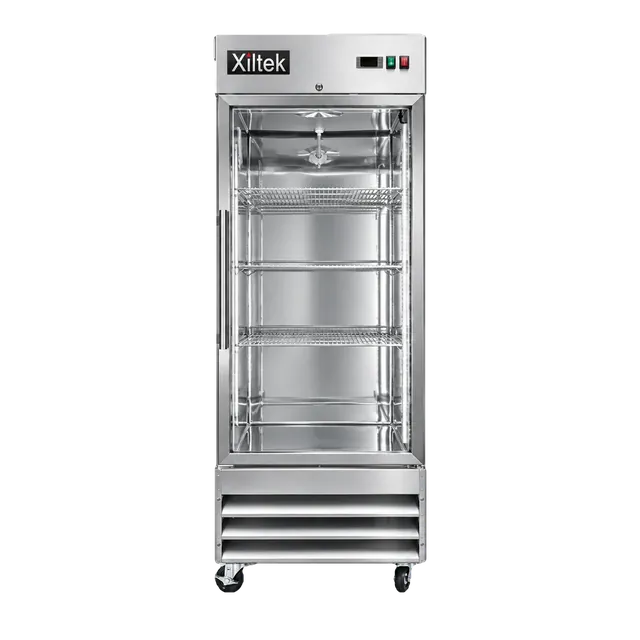
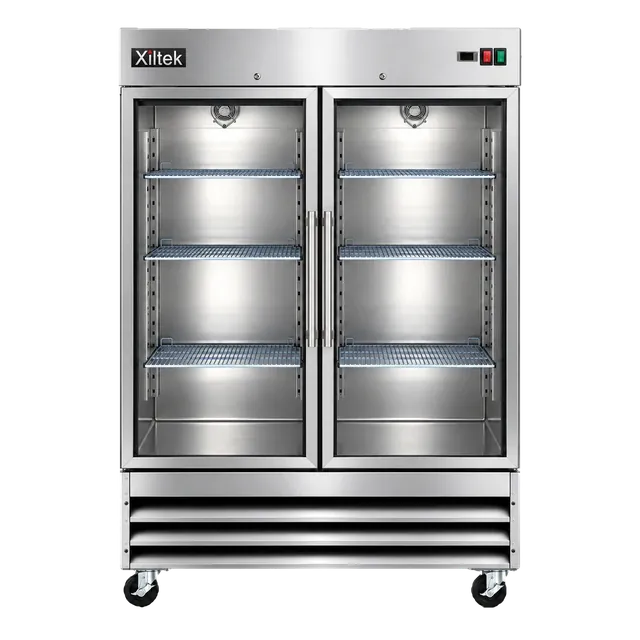
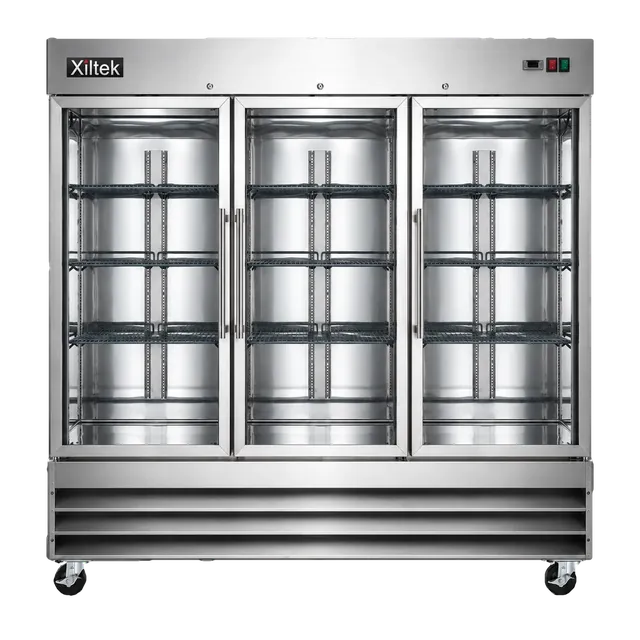
Xiltek builds its commercial refrigerators, freezers, prep tables and display cases around R290 natural refrigeration systems, so you get the efficiency and very low global warming potential described above without having to go looking for it. Read more on our natural refrigerant page, then compare models in the full catalog.
Combined with durable stainless steel construction, that makes Xiltek equipment a practical, forward-looking choice for any commercial kitchen or shop.
Frequently asked questions
Is R290 safe to use in a commercial kitchen?
Yes, when it is used the way it is designed to be. Units are sealed at the factory with a small, strictly limited charge and built to safety standards for flammable refrigerants. Follow the manual for clearances and ventilation.
Can I convert an older refrigerator to R290?
No. Equipment must be designed and certified for the refrigerant it uses. Converting a unit built for a different refrigerant is unsafe and not permitted.
Does R290 need special installation?
Not beyond what the manual says. Allow the clearances listed, keep the condenser area clear and plug the unit into a properly rated outlet.
Who can service an R290 unit?
A technician who is trained and equipped for hydrocarbon refrigerants. Cleaning the coil, gaskets and interior is safe for you to do yourself with the unit unplugged.